
Self-observation is a tool that I use with my clients from golf and other sports. It is one of the most important steps to overcoming any challenges, because once we begin to observe how we think, feel and act, we start the processes of reversing negative and restricting behaviours that can undermine our true ability, both on the golf course and in life itself.
What is self-observation?
“Observing yourself is the necessary starting point for any real change.”
James Flaherty, author of ‘Coaching: Evoking Excellence in Others’ (Routledge) describes self-observation as this, “To self-observe means to not become attached to or to identify with any content of our experience, but to watch alertly, openly, passively.” You need to be able to watch or be aware alertly and openly of your thoughts, emotions and moods in order to see them for what they are. The Oxford Dictionary defines self-observation thus: the objective observation of one’s own attitudes, reactions or thought process.
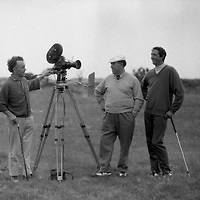
In the most basic sense, self-observation is the ability to view yourself as if you were observing yourself from a behind a video camera. In some coaching circles they call it the big-eye; not the mind’s eye, but the big-eye of you watching your moods, emotions, thoughts and body objectively. The origins of the exercise come from the ancient Mystery Schools of the East.
How do you become an observer?
At first, being a self-observer and playing two roles (the observer and the observed) is very challenging. As with all exercises I introduce, it will become easier and more useful with practice. To help you get started, I am going to share with you:
- An exercise on how to observe yourself in the moment to catch immediate thoughts, feelings and emotions as you walk to the first tee.
- An exercise on how to observe yourself over a specified duration (a golf practice session) in order to look at ingrained patterns, habits and or behaviours.
- How to create your own self-observations.
Exercise # 1: Walking to the first tee
Objectives: To become more aware of my mood, feelings, thoughts and physical responses when walking to the first tee and teeing off and to begin to understand how I react to this stressful situation.
Instructions: Prior to the start of your game, practice slow, deep breathing to gain presence and awareness of your mind, body and emotions Simply observe and notice what is going on without criticising or commenting to yourself. Immediately following your first tee shot, ask the following questions:
- What was I feeling as I walked to the tee?
- What were my exact thoughts, what was my inner dialogue?
- How did I show up to this particular game? What is my mood?
- What judgments and assessments do I have about my game at the moment?
- What judgments and assessments do I have about the outcome of the shot?
The idea is to start becoming an observer of your traits in the moment so you can see how they impact your actions and results. Observe yourself without judgment, and then take a few moments to reflect on the conversation. Later you might wish to write down your observations in a training log.
This blog is an extract of an article which appeared in Golf International, April 2014.
Read the full article and many others in my free eBook, which you can find and download at the bottom of this free-content page