Here’s the next installment in my long-running series, 13 Principles of Effortless Motion…plus comment from an elite athlete who discovered this principle just in time to win a World Championship!
Principle No. 8 – Over-thinking the technical aspects of motion hijacks the signals being sent to your motor-system, disrupting your rhythm and timing, and results in clumsy, ineffective movement and the poor execution of form.
As you most likely know, my work is all about developing the correlation between these three things which can only be accomplished with the right training.
- A quiet mind
- Deeper breathing
- Relaxed body
The purpose of which is to allow you to release natural and effortless movement, especially when you’re under pressure.
There is a symbiotic relationship between these three states (which form the ultimate ‘performance triad’) and you will have experienced it first-hand if you’ve been practicing meditation, either the seated or standing versions which form the bedrock of the Chi-Performance method. This is an Eastern approach which seeks to unite mind and body (rather than separate them into mental game and technique which is how the mainstream approaches sports-performance per se).
When the mind is quiet and the breath is deep in the abdomen, not only can the body relax (which means you’re not going to tighten-up on crucial shots) but the right part of the mind can speak directly to your muscle-fibres, bones and tendons which, after all, are the component parts responsible for executing the intended movement.
Developing this ‘performance triad’ (with what Zen-master Shunryu Suzuki calls the ‘special effort’ necessary to meditate) allows a complex sequence of movement like the tennis-serve, golf swing or as we’ll see in a moment, striking the ball into the net in a championship game of hurling, to be performed in a way that is effortless…all because you have trained yourself to get out of your own way.
By that I mean you have conditioned yourself through your weekly practice to reduce mental interference and control your biochemistry (nerves and anxiety) which in turn allows the body to move freely when you’re competing in your sport.
Here’s some feedback I received last week which clearly shows from a high performance athletes’ point of view, the changes that can occur when you commit to regular meditation.
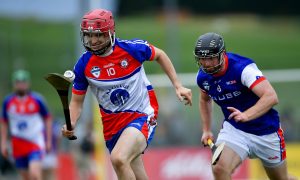
“Before playing at the GAA Hurling World Championships, I knew I was a good player, but I was not performing to my best ability. I would over-hype games in my head and make myself anxious resulting in me losing the ball when it came to me as I would panic in not wanting to make a mistake. I went to Worlds with no confidence and had very little expectations for my performance. I used your meditation training guide before I left and every morning of the tournament as soon as I woke up, I followed the steps and meditated.
I felt focused and calm before, during, and after each game resulting in me having the best tournament of my life, scoring a total of 5 goals and at one point being one of the leading scorers in my team. Every time the ball came to me I was able to pick it up and get it to my hand, and strike it clearly into the net, I knew my job and accomplished it over and over again. I was able to not worry about making mistakes or not making it to the final but just put my head down and get into the zone and when I did make mistakes, I let them go instead of dwelling on them. The meditation helped me not only to win a world championship but to enjoy the sport of Hurling even more so”. – Dave Lewis

Well done Dave!
Happy training everyone 🙂