Here’s the next installment in my series 13 Principles of Effortless Motion
Principle No. 7 – An equipoised mind, balanced between thinking and not thinking, allows the muscles needed to execute complex movement, to activate in the correct sequence…the result is a ball striking experience which athletes describe as effortless.
For most of my life I’ve been fascinated by the relationship between internal stillness and the quality of external movement, particularly in sport. The unique ability to be quiet inside while the body is in motion is something you’ll have noticed perhaps watching practitioners of Aikido or Tai Chi.
Indeed, since the turn of the millennium I have been working with golfers and tennis players, using principles from the martial and meditative arts (which are sometimes referred to as ‘deep practice’) to enable them to achieve a better connection between upper and lower body, unification of mental game and technique and above all to help facilitate access to the coveted zone or flow-state of relaxed concentration.
The ability to be focused and yet relaxed is the goal of all competitive athletes as it allows the body to move with fluidity yet precision, a quality which, when two competitors are of equal technical ability and fitness levels, is the one distinguishing factor separating the champion from the runner-up.
Hitting the winning shot is what tournament golf and tennis are all about. Here’s how an Eastern approach to sports performance training can help bring this about.
Effortless motion

Perhaps the most important thing in sports is the ability to perform under pressure and more specifically, to perform complex movement skills such as the golf swing or the tennis serve in a way that is effortless during the white heat of competition.
This effortlessness that athletes experience when they are in the zone springs from a heightened state where mind and motion come together for the shot; it is a direct parallel to the Zen-mind which is usually obtained through meditation but it can also be accessed via other practises such as sport-specific postural training, slow motion drills and other mindful movement exercises.
We often hear commentators talk about the importance of being ‘in the now’ and sports stars have spoken about staying present as a key determining factor in their ability to win. Tiger Woods attributed much of his recent comeback at The Masters to staying in the moment and Rafael Nadal (winner of an unbelievable 12 French Open titles at Roland Garros which Greg Rusedski says will still be talked about 200 years from now…) has an enviable ability to stay in the now and let a poor shot go without dwelling on it.
Is it possible for the committed amateur or club player to do the same? Yes it is, but first we need to do away with some assumptions that may be holding you back.
It’s simpler than you think
To begin with, we need to explode some of the myths around performance.
The first myth is that a winning performance depends on how much you know about technique and your ability to rework technique (i.e. change your grip) when things aren’t going well during a game.
The second myth is that winners are determined by how fast they can run, what they can squat in the gym or how hard they can hit the ball; in other words that the fittest athlete always triumphs.
The third myth is that champions depend on so-called positive thinking and self-affirmations to give themselves courage and confidence when they’re in contention and under pressure to perform.
The truth is actually far simpler.
Although technical ability, fitness and self-belief are all important there is another dimension to sporting greatness which you’ve probably enjoyed yourself on the golf course or the tennis court whenever you’ve experienced an effortless strike of the ball.
And you probably don’t need me to tell you that when you are thinking about your technique during a shot or when you rely on positive thoughts to get you through a tough game, your body just doesn’t respond the way it does when that feeling of effortlessness comes over you.
Trying too hard and thinking too much are the last things you need to be doing in the middle of a game. When you revert to this your analytical mind is engaged and disrupts the mind~body connection, your muscles tighten and this renders your movement clumsy as your form deteriorates and you end up forcing the ball over the net or down the fairway.
The simple truth
The latest research from neuroscience shows us that a winning performance is completely dependent on the mind~body connection and moreover, the athlete with the quietest mind in the moments before they make their shot, will strike the ball in a way that is effortless and sublime and will ultimately beat their opponent.
Keeping the communication channel open between your mind and body means getting out of your own way and letting your body move the way it was designed to move; this allows access to a state of relaxed power where movement is fluid yet precise and is the body’s way of manifesting the zone.
Just picture a group of people doing Tai Chi in the park to get an idea of what I mean.
It translates into golf as the perfect shot, hitting the ball pure – in tennis it is the sublime backhand down the line or playing a non-returnable angle. You’ve seen it in Aikido as the effortless throw.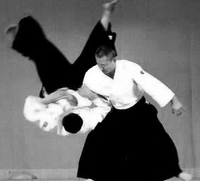
As I wrote in a recent blog, the dilemma in sports performance is that the body loves to move while the mind likes to analyse movement! Bringing the mind and body together is the Eastern way and, I believe, the new frontier in performance training for athletes.
How can it help you?
Bringing your mind and body together depends on quieting the mind, deepening the breathing and being present in your body, a very different experience to focusing on technique.
When your analytical mind is quiet, you allow the signal about your intended motion to go directly to the brain’s motor-system which will then govern the kinematic sequencing of movement, resulting in a strike of the ball that is pure and effortless.
As you quieten your mind and get out of the way, your skeletal-system, muscle-fibres and tendons will all activate in the right sequence with the bigger muscles firing before the smaller ones, and the fast-twitch muscle-fibres (responsible for explosive movement) being activated instead of the slow-twitch muscles which fire when you try to force your way through a shot by thinking about technique.
The perfect strike of the ball is always experienced in the moment when mind and body come together and not when you’re thinking about what you’re going to do, whether it’s getting your second serve in or sinking a clutch putt.
Training the mind~body connection can be done with the help of the deep practises well known in the Eastern arts and applied in a sport-specific way to golf and tennis.
Try this
As you stand over the golf ball or wait on the baseline to receive your opponent’s serve, become aware of your breathing. If your breath is shallow and you notice your chest rising and falling as you inhale and exhale aim to draw your attention down to just below the navel area (known as the t’an tien or hara) and keep it there until your breath becomes slower and deeper. This might take a bit of practice but Eastern philosophy as well as new science tells us that energy follows attention so if you place your attention on the hara (approx. 1.5 inches below the navel) you will start to breathe more deeply which in turn counteracts feelings of anxiety as well as giving your brain and muscles more oxygen.
Focusing on the hara also helps you to become physically grounded as it connects you with your body’s natural centre of gravity. Many of the athletes I’ve worked with have noticed this awareness results in increased physical strength and a greater ability to engage the core without compromising lower-body stability. Positioning your awareness on this area has the added benefit of neutralizing your emotions by keeping you in the present moment.
Try working your golf swing or tennis drills in super slow motion, all the time keeping your awareness on the hara or t’an tien and see how often you can initiate movement from this area. Martial artists see the hara as a small ball or sphere inside the lower abdomen which acts as a fulcrum of movement around which the upper body can turn. You might be surprised how this simple focus helps you feel more rooted and allows for greater relaxation of the upper body, resulting in better coordination and timing. You’ll also be amazed at how much power you can generate as you start accelerating through the ball using the t’an tien as the pivot point of motion for the club or racket.
Happy training!
Jayne
For details of 1-1 and Skype training programmes, including a special offer on ‘Taster’ sessions, please get in touch and tell me a little bit about yourself and the challenges you’re currently facing on the golf course or tennis court.